
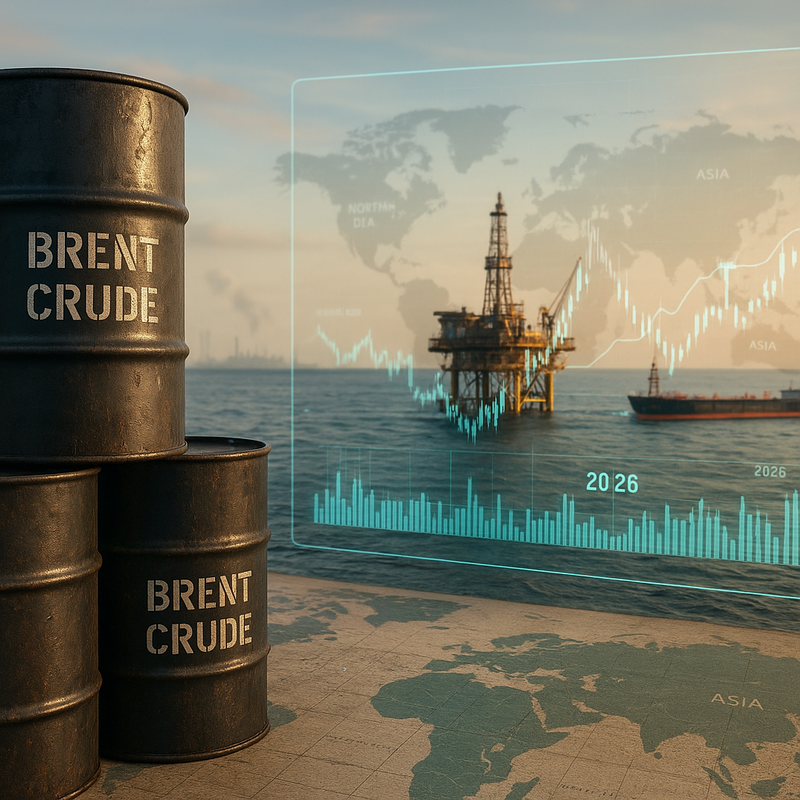
The State of Brent Oil and Crude Oil
Introduction: Understanding Brent Oil and Crude Oil
Oil remains a fundamental pillar of the global energy framework and economic landscape. Among the various oil types, Brent Crude stands as a crucial global benchmark for pricing and market evaluation, while other crude oils like West Texas Intermediate (WTI) serve as important regional standards. Navigating the oil markets in 2026 requires a solid grasp of these commodities—their origins, pricing mechanisms, market influences, and future prospects.
This analysis dives deep into the complexities surrounding Brent Oil and crude oil, tracing their historical evolution, current market dynamics, environmental challenges, and future outlooks. By exploring these factors, readers will gain a clearer understanding of what drives the energy sector and global economy today.
1. Historical Overview of Brent and Crude Oils
1.1 Origins of Brent Crude
Brent Crude originated from the Brent oil field in the North Sea, discovered in the late 1960s. Known for its light, sweet quality with low sulfur content, Brent quickly became a favored benchmark for international oil pricing. Its exceptional refining properties and consistent quality make it an ideal standard to track global oil market trends accurately.
1.2 Overview of Other Crude Types
While Brent Crude dominates global pricing benchmarks, other crude types like WTI and Dubai Crude hold significant roles in regional markets. WTI, primarily sourced from U.S. oilfields, shares light and sweet characteristics but acts as a North American price indicator. Dubai Crude, heavier and sourer, plays a vital role in pricing Middle Eastern oil directed towards Asian markets.
Key Insight: Understanding diverse crude grades like Brent, WTI, and Dubai Crude offers a comprehensive view of the global oil supply landscape, enabling pricing mechanisms that reflect regional variations and market demands.
2. Understanding Oil Pricing
2.1 Brent vs WTI
The price relationship between Brent and WTI remains a focal point for traders and analysts. Typically, Brent trades at a premium due to greater logistical advantages and wider market acceptance. In 2026, this price difference fluctuates as regional supply chains, transportation costs, and demand trends across continents evolve.
2.2 Factors Influencing Oil Prices
- Supply and Demand: Core drivers that push prices up when supply declines or demand rises.
- Geopolitical Stability: Conflicts, sanctions, and regional politics can abruptly affect oil availability and investor confidence.
- Technological Advances: Innovations such as shale and deep-water drilling expand supply and reduce production costs.
- Global Economic Health: Economic growth or contraction impacts industrial activity and energy consumption, thus influencing oil demand.
Key Insight: A firm grasp of these pricing drivers equips market participants to anticipate fluctuations and potential volatility in oil markets.
3. Current Market Dynamics in 2026
3.1 Market Snapshots
In 2026, Brent Crude hovers around $72 per barrel, signaling relative market stabilization following recent volatility. This rebound corresponds with increased global economic activity, where industries like aviation and manufacturing ramp up operations, driving higher oil consumption.
3.2 Geopolitical Influences
Geopolitical factors continue to significantly shape market dynamics. Coordinated production decisions by OPEC+ aim to maintain market balance and reduce disruptive price swings. However, ongoing tensions in crucial oil-producing regions sustain uncertainty in supply outlooks.
Key Insight: Staying abreast of geopolitical developments is essential, as they can swiftly influence supply availability and market price expectations.
4. Environmental Impact of Oil Production
4.1 Carbon Footprint and Emissions
Oil production and transportation contribute substantially to global greenhouse gas emissions. The carbon footprint varies depending on extraction methods and geographic locations, drawing increasing scrutiny from environmental advocates and policymakers.
4.2 Shifts in Energy Policies
In response to growing climate concerns, both governments and industry players enforce stricter regulations while investing in cleaner technologies. These shifts challenge traditional oil production paradigms and fuel innovation toward greener alternatives.
Key Insight: Embracing sustainability is not only an environmental imperative but also presents an opportunity for the oil sector to evolve responsibly and maintain relevance.
5. Future Trends and Predictions
5.1 Technological Innovations
Cutting-edge technologies like Carbon Capture and Storage (CCS) promise to reduce emissions tied to oil production. Additionally, artificial intelligence and advanced data analytics enhance operational efficiency and market forecasting, empowering smarter decision-making.
5.2 The Drive Toward Sustainability
Growing global commitments to net-zero goals will push oil companies to rethink strategies, incorporating renewables or diversified business models. This transformation may involve expanding portfolios and investing in green infrastructure.
Key Insight: The future of oil intertwines technological progress with sustainability commitments, reshaping production, investment, and market dynamics.
6. The Role of Speculation in Oil Markets
6.1 Influence of Hedge Funds and Speculators
Hedge funds and speculative traders actively exploit market movements using sophisticated algorithms. While speculation adds market liquidity, it can also accentuate price volatility detached from physical supply and demand fundamentals.
6.2 The Importance of Futures Contracts
Futures contracts offer vital tools for risk management, enabling producers and consumers to hedge against price swings. Understanding these financial instruments is crucial for those seeking stability amid market fluctuations.
Key Insight: Recognizing the impact of speculation and financial hedging tools allows for a more nuanced interpretation of oil price trends.
Conclusion: The Future of Oil in a Changing World
In 2026, Brent Oil and crude oil markets reflect an industry at the crossroads—balancing traditional energy roles with emerging environmental and technological challenges. Stable prices, buoyed by economic recovery, geopolitical decisions, and a pivot toward sustainability, define the current landscape. Technological advancements and climate commitments are driving profound shifts in production and investment strategies.
For investors, policymakers, and consumers alike, staying well-informed about these evolving dynamics is indispensable. Leveraging reliable data, diversifying energy portfolios, and anticipating global market trends will be key strategies to navigate this complex energy future confidently.
Suggested Next Steps
- Track live Brent Crude prices via trusted platforms like Trading Economics.
- Explore energy sector ETFs that blend traditional oil assets with renewable energy investments.
- Stay updated on global energy policies and innovations to gauge their long-term impact on oil markets.
By adopting a comprehensive, forward-thinking approach, stakeholders can master the complexities of the Brent Oil and crude oil markets in 2026 with insight and confidence.
