
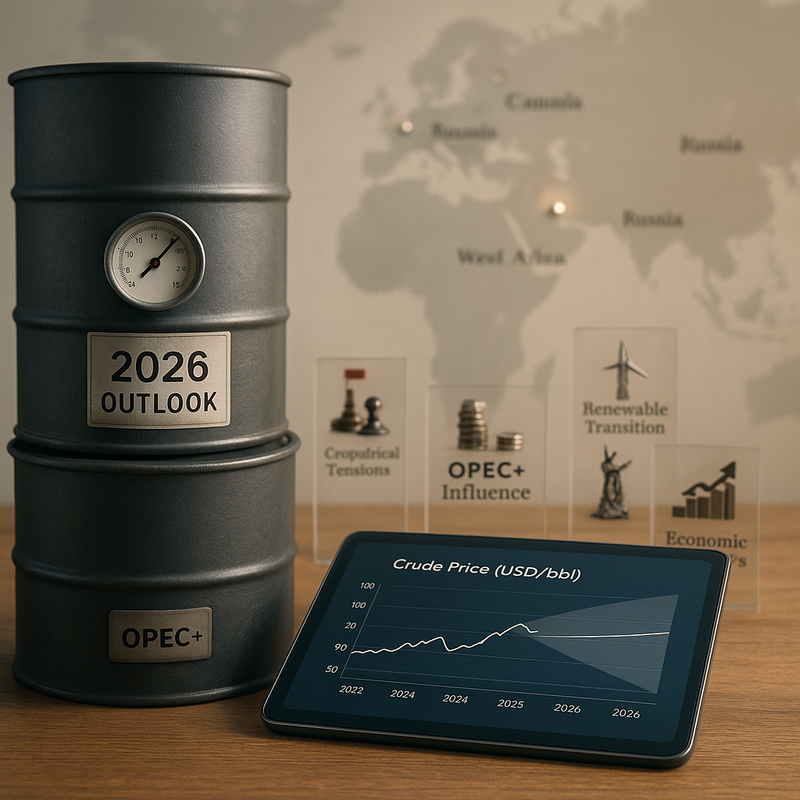
The 2026 Outlook for World Crude Oil Prices: Trends, Factors, and Future Implications
Introduction
In 2026, global crude oil prices continue to serve as a critical barometer of economic health and geopolitical stability. As energy markets evolve amid expanding climate initiatives, rapid technological advances, and shifting policy frameworks, understanding what drives oil prices has never been more essential. This article presents a concise overview of the key trends shaping crude oil prices, examines the main influencing factors, and explores the broader implications for industries, consumers, and policymakers worldwide.
Understanding Crude Oil Prices
What Determines Crude Oil Prices?
Crude oil pricing is influenced by a complex web of factors, including:
- Supply and Demand: The fundamental economic axis of price changes—tight supply or surging demand pushes prices up, while abundant supply or weakening demand exerts downward pressure.
- Geopolitical Events: Political instability in oil-producing regions can disrupt supply chains, triggering price volatility.
- OPEC+ Production Policies: Coordinated production decisions by OPEC and its allied producers actively shape market prices, striving for equilibrium or strategic advantage.
- Economic Indicators: The health of major economies like the U.S., China, and the Eurozone directly affects oil consumption and pricing.
- Technological Innovations: Advances such as hydraulic fracturing have expanded oil extraction capabilities, increasing supply and influencing prices.
- Environmental Regulations: Policies aimed at reducing carbon emissions and promoting energy diversification contribute to long-term demand shifts and pricing dynamics.
- Currency Fluctuations: Since oil trades predominantly in U.S. dollars, changes in the dollar’s value impact global purchasing power, affecting demand and prices.
The 2026 Price Landscape
Early 2026 shows Brent crude prices steady around $70 per barrel, indicating market stabilization after prior volatility. West Texas Intermediate (WTI) prices trend slightly lower, reflecting U.S.-specific production and consumption patterns.
Additionally, tensions in natural gas markets add complexity to global energy supply chains, influencing oil demand through fuel substitution effects.
Key Drivers Impacting Oil Prices in 2026
Geopolitical Uncertainty
Persistent political unrest in oil-rich regions — most notably involving Iran and Venezuela — continues to introduce supply risks that keep markets cautious. Moreover, sanctions targeting Russia remain a significant disruption factor, constraining global supply and pushing prices upward.
Economic Growth Outlook
Global growth prospects for 2026 remain moderate amid inflation concerns, tightening monetary policies, and possible regional recessions. Such economic headwinds moderate oil demand growth, affecting overall price trajectories.
OPEC+ and Its Influence on Market Stability
Strategic Production Control
OPEC+ remains pivotal in balancing supply and demand by fine-tuning production levels. Their move to cut output by around 1 million barrels per day in 2026 aims at sustaining price stability against geopolitical and supply uncertainties.
Drawing lessons from 2024, when OPEC+ production adjustments combined with supply interruptions from Russia caused notable price surges, market watchers expect ongoing flexibility in OPEC+ policy to respond swiftly to evolving conditions.
Technology’s Role in Shaping Market Dynamics
Extraction Innovations
Breakthroughs in hydraulic fracturing and horizontal drilling have unlocked oil reserves once deemed uneconomical. This increased supply capability places downward pressure on prices when growth in demand does not keep pace.
Renewable Energy Transition
As investments in renewable energy accelerate, the energy mix is shifting. While crude oil remains indispensable across many sectors, this shift gradually influences long-term demand patterns and pricing structures.
Looking Forward: What Lies Ahead for Crude Oil Prices?
Price Projections
Although exact outcomes remain uncertain, many forecasts anticipate moderate price increases throughout 2026, with Brent potentially reaching $75 to $80 per barrel if demand holds steady and geopolitical tensions persist.
Impact of Environmental Policies
Global climate commitments present a serious challenge to fossil fuel demand. Oil companies are proactively diversifying portfolios and funneling investments into sustainable technologies, heralding transformative shifts in market dynamics and pricing models.
Conclusion
The 2026 crude oil market is shaped by a sophisticated interplay of supply-demand fundamentals, geopolitical risks, technological progress, and evolving environmental priorities. Staying informed about these factors is crucial for industry leaders, policymakers, and consumers navigating an energy market in flux.
Key Takeaways:
- Crude oil prices respond to a broad range of factors, making the market sensitive to both immediate events and long-term trends.
- OPEC+ continues to wield substantial influence through strategic production management.
- The ongoing transition to renewable energy introduces new uncertainties, demanding adaptive strategies from all market participants.
Next Steps:
- Monitor OPEC+ decisions closely for potential production updates.
- Follow analyses from the Energy Information Administration (EIA) and International Energy Agency (IEA) for up-to-date price forecasts.
- Track renewable energy developments to anticipate their impact on future oil demand.
By mastering these evolving dynamics, stakeholders can make informed decisions in an ever-changing energy landscape, where the balance between traditional oil reliance and sustainable alternatives will reshape economic and geopolitical realities for years to come.
