
Brent Crude Oil Rate Today: Understanding Market Dynamics in 2026
Introduction
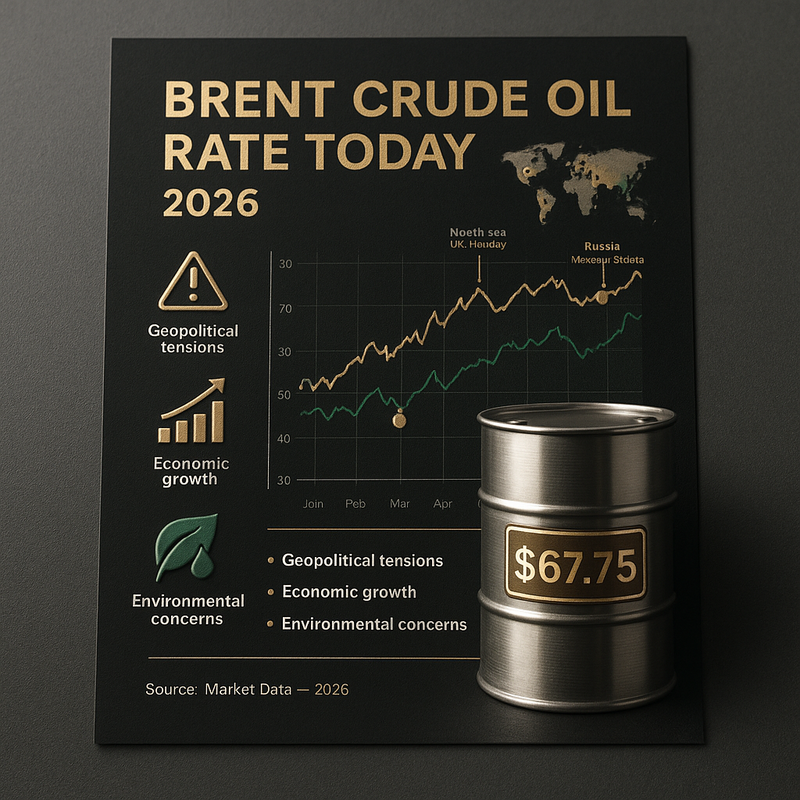
As of February 14, 2026, Brent crude oil is trading at around $67.75 per barrel. This key Brent crude price today highlights the current landscape of the global oil market and prompts a deeper look into the factors shaping crude oil prices. For investors, businesses, and policymakers, grasping Brent crude oil market dynamics is crucial to making informed decisions on energy use, investment strategies, and economic planning—especially amid evolving geopolitical tensions and growing environmental concerns.
Brent crude is a fundamental global oil benchmark, renowned for its quality and serving as the pricing basis for over two-thirds of internationally traded crude. Monitoring Brent crude oil rate today offers essential insights into larger economic trends. This article breaks down Brent crude’s features, recent price developments, market drivers, global impact, and what to expect going forward.
What Is Brent Crude Oil?
Brent crude oil comes from the North Sea and is known as a light, sweet crude—meaning it has low density and sulfur content. This makes refining into gasoline and other products more efficient and affordable.
Why Brent Crude Matters
- Global Benchmark: Brent sets the reference price influencing crude oil pricing worldwide.
- Trading Instrument: It is actively traded through futures and options in international markets.
- Economic Gauge: Brent price trends serve as indicators of economic health and influence policy and investment decisions.
Recognizing Brent crude’s central role explains why its price shifts resonate beyond mere commodity markets.
Current Trends in Brent Crude Pricing
On February 14, 2026, Brent crude is priced at $67.75 per barrel, marking a modest 0.34% rise from the previous day. Over the last month, prices have edged up by approximately 1.85%, signaling a steady yet cautious upward trend amid ongoing volatility.
Key Factors Shaping Today’s Brent Prices
- OPEC+ Supply Management: Continued production cuts help balance global oil supply against fluctuating demand.
- Post-Pandemic Demand Recovery: Economic resurgence and increased travel bolster fossil fuel consumption.
- Geopolitical Tensions: Instability in major oil-producing regions introduces supply uncertainty, elevating prices.
- Environmental Regulations: Climate policies affect production capacity and promote shifts toward renewable energy alternatives.
- Market Speculation: Investor reactions to geopolitical and economic news amplify price fluctuations.
- U.S. Dollar Movements: Since oil is priced in dollars, currency strength directly impacts oil costs worldwide.
Price Snapshot
| Last Week’s Close: | $67.52 |
| Monthly Range: | $66.89 (low) to $68.05 (high) |
This relatively contained volatility reflects producers’ efforts and dynamic market responses to global events.
Historical Brent Crude Price Patterns
Brent crude prices have historically mirrored geopolitical events, OPEC’s supply strategies, and major demand changes:
- 2020–2021: The pandemic caused unprecedented demand drops, even pushing futures into negative territory.
- 2022–2023: Recovery and supply shocks like the Ukraine conflict sent Brent soaring above $120 per barrel.
- 2024–2025: Coordinated production and market adjustments helped stabilize prices alongside recovering economies.
These trends offer context to Brent crude oil rate today as part of broader market cycles.
Impact of Brent Crude Prices on Global Economies
Economic Growth and Inflation
- Fuel Expenses: Rising Brent prices increase costs for consumers and industries, driving inflation.
- Industry Effects: Energy-dependent sectors face higher operational costs, potentially slowing growth.
- Consumer Behavior: More expensive fuel means less disposable income, possibly reducing overall spending.
Geopolitical Ramifications
Higher revenues benefit oil exporters, while importers face economic challenges, potentially reshaping international relations and energy policies.
Shift Toward Renewables
Volatility and sustainability pressures accelerate investment in renewable energy, signaling a gradual move away from fossil fuels over time.
Looking Ahead: Brent Crude Price Forecast
Market Outlook
Experts predict moderate price increases driven by industrial growth and travel demand, tempered by geopolitical risks and supply uncertainties.
Technological Innovations
Advances in extraction and renewable technology will continue influencing supply patterns and may ease long-term fossil fuel demand, helping moderate future price inflation.
Conclusion
The Brent crude oil rate today of $67.75 per barrel reflects a complex mix of supply constraints, recovering demand, geopolitical tensions, and shifting energy policies. As global energy transitions unfold, understanding these market forces is vital for investors, policymakers, and businesses seeking to navigate the evolving landscape.
Key Takeaways
- Brent crude remains a central global oil benchmark.
- Prices show a gradual upward trend amid nuanced market factors.
- Oil prices impact economic growth, inflation, geopolitical stability, and energy transitions.
Recommended Actions
To manage the complexities of Brent crude oil market dynamics:
- Stay Informed: Follow trusted sources like the U.S. Energy Information Administration and financial news.
- Diversify Portfolios: Include renewable energy investments alongside traditional assets.
- Consult Experts: Leverage analysis from energy market professionals for strategic decision-making.
By adopting these strategies, stakeholders can better navigate the challenges and opportunities in the 2026 energy market and beyond.
