
The Oil Barrel Price in 2026: Trends, Factors, and Future Outlook
Introduction
Oil remains one of the most influential commodities in the global economy, shaping everything from transportation costs to energy security. As we move through 2026, keeping a close eye on the oil barrel price in USD is critical for investors, policymakers, industry leaders, and consumers alike. The volatility of oil prices is driven by a complex blend of geopolitical events, supply and demand shifts, and evolving energy technologies. This analysis breaks down the current landscape, explores the primary factors behind oil price fluctuations this year, and provides insights into what lies ahead for the oil market.
Understanding these dynamics is crucial—not just for those directly engaged in energy markets, but also for anyone tracking broader economic trends and their practical effects.
Understanding Oil Prices
What Influences Oil Prices?
Oil prices are primarily shaped by three key factors: supply and demand dynamics, geopolitical events, and economic indicators.
- Supply and Demand Dynamics
- OPEC+ Production Decisions: OPEC and its allies carefully adjust oil production to balance the global market and stabilize prices. Changes in their production quotas swiftly impact oil barrel prices worldwide.
- U.S. Shale Production: The U.S. shale oil boom, propelled by hydraulic fracturing and horizontal drilling, significantly influences global supply. Increased shale output often helps alleviate shortages and soften price spikes.
- Geopolitical Events
Political instability—whether conflicts, sanctions, or diplomatic strains—in key oil-producing regions can disrupt supply chains and fuel price volatility. For example, sanctions on Russia have complicated oil flows, sometimes pushing barrel prices higher. - Economic Indicators
The health of the global economy directly affects oil demand. Economic growth boosts energy consumption and drives up prices, while downturns reduce fuel needs and can push prices lower. Additionally, because oil is priced in dollars, fluctuations in the USD value inversely influence the oil barrel price in USD.
Current State of Oil Prices (2026)
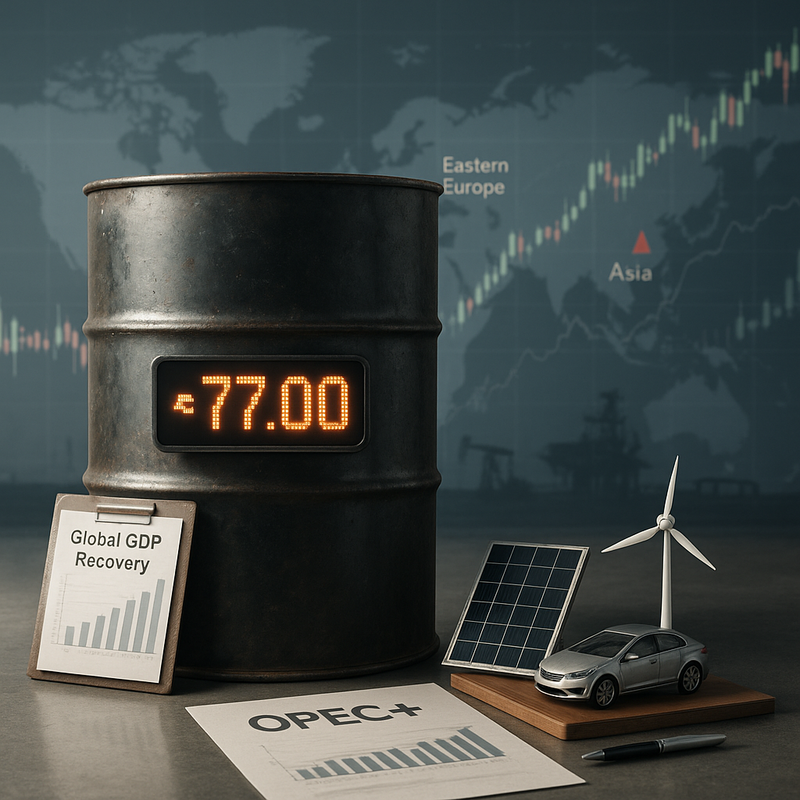
As of March 2026, Brent crude trades near $77 per barrel, with West Texas Intermediate (WTI) slightly trailing at around $74 per barrel. This marks a recovery from late 2025, when rising interest rates and economic uncertainties pushed oil barrel prices below $72.
Historical Context
Putting current prices into perspective reveals oil’s notorious volatility:
- The 2020 COVID-19 pandemic caused an unprecedented crash as demand plunged.
- The global reopening in 2021-2022 sparked a sharp rebound in oil barrel prices.
- The G7’s price cap on Russian oil around $60 added new complexity to market dynamics.
Appreciating these past shifts helps decode today’s price environment and anticipate future trends.
Key Factors Driving Oil Prices in 2026
Economic Recovery and Global Demand
The gradual post-pandemic economic recovery is raising oil demand across transportation, manufacturing, and hospitality sectors. Though growth varies regionally, overall global energy consumption is climbing, supporting a steady oil barrel price in USD.
U.S. Shale Production
U.S. shale oil continues to act as a market stabilizer. With advancements in extraction technology and favorable prices, shale producers can quickly ramp up output, helping to balance supply and keep oil barrel prices stable.
Geopolitical Tensions
Ongoing geopolitical risks remain a wild card. Particularly, conflicts involving Iran, Eastern Europe tensions, and sanction regimes pose threats to supply chains, often causing short-term spikes in oil barrel prices.
Technological Developments
The gradual shift toward renewable energy sources and improved efficiency exerts a moderating long-term effect on oil demand. Growing adoption of electric vehicles and alternative fuels signals structural change that could soften oil dependency and impact future oil barrel price trends.
Future Predictions for Oil Prices
Short to Medium Term: 2026-2028
Experts generally expect oil barrel prices to stay in the mid-$70s through 2026, supported by balanced demand recovery and OPEC+ supply management. However, this outlook depends on:
- Sustained global economic growth amid regional disparities.
- OPEC+ producers’ continued collaboration to manage supply effectively.
- Absence of major geopolitical shocks disrupting supply unexpectedly.
Long-Term Outlook: 2028 and Beyond
Looking further ahead, energy transitions will redefine oil prices:
- Shift to Renewable Energy: Ambitious carbon-neutral goals worldwide are likely to reduce oil demand.
- Regulatory Pressures: Increasing climate policies and regulations will constrain fossil fuel use.
- Technological Innovation: Breakthroughs in energy storage, more efficient technologies, and alternative fuels will reshape demand and oil price structures.
Conclusion
The oil barrel price in 2026 remains a crucial indicator of global economic and political realities. Current prices reflect a delicate balance of recovering demand, coordinated production decisions, and geopolitical risks. While near-term prices are expected to stabilize around the mid-$70 range, the long-term outlook points to transformative shifts driven by sustainability goals and technological progress.
Key Takeaways
- Oil barrel prices in 2026 have rebounded to mid-$70 levels, propelled by steady economic recovery and strategic supply management.
- Geopolitical uncertainties continue to inject volatility into the oil market.
- The global energy transition towards renewables and electrification will gradually reshape oil demand and pricing.
Staying informed about these evolving trends is essential for anyone affected by or interested in the global energy landscape. For the latest insights and detailed analysis, consult authoritative sources such as
OPEC’s reports,
Trading Economics, and
Oil Price.
