
Crude Oil Production by Year: Your Ultimate 2026 Guide
Introduction
Crude oil powers the world economy—fueling everything from energy grids to countless industries. Staying updated on crude oil production trends is crucial for investors, energy professionals, and policymakers alike. As 2026 approaches, understanding how production has evolved year by year offers key insights into global market shifts. This comprehensive overview breaks down past production data, unveils the forces shaping these trends, and highlights what to expect in the near future.
Where We Stand: Crude Oil Production Today
In 2024, the United States led global crude oil production with about 857.9 million metric tons, according to the U.S. Energy Information Administration (EIA). This sharp rise underscores America’s dominance, powered by cutting-edge technologies and aggressive exploration efforts. Meanwhile, traditional giants like Saudi Arabia and Russia continue to drive significant output, keeping competition fierce.
Global Trends Shaping Crude Oil Production
- Shale Oil Boom: Hydraulic fracturing and horizontal drilling unleashed vast shale reserves, catapulting the U.S. to the top of the production charts.
- OPEC’s Influence: The cartel’s strategic production quotas remain a major factor, balancing supply and market prices worldwide.
- Renewables on the Rise: Growing environmental focus pushes the oil sector to innovate cleaner extraction methods like carbon capture and storage.
- Geopolitical Challenges: Sanctions, political unrest, and international treaties continue to affect production in key regions like Venezuela and Iran.
Knowing these forces helps make sense of the year-to-year production numbers.
Year-by-Year Crude Oil Production Snapshot
2016–2020: Bouncing Back Amid Volatility
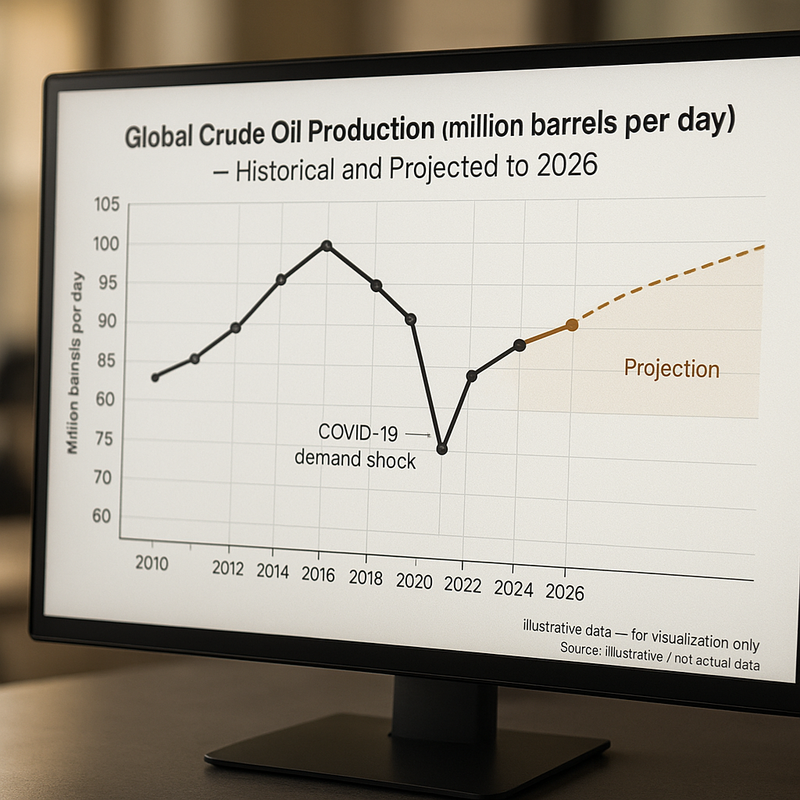
- 2016: Global production hovered near 96 million barrels per day (bpd), pressured by oversupply and low prices.
- 2017: OPEC’s extended production cuts helped stabilize the market, sparking a gradual rebound.
- 2018: The U.S. broke past 11 million bpd, driven by shale advancements; worldwide output hit around 100 million bpd.
- 2019: Production peaked near 101 million bpd, thanks to strong growth in the U.S., Brazil, and Canada.
- 2020: The pandemic delivered a stark demand shock, slashing output to about 90 million bpd globally.
2021–2025: Recovery and New Heights
- 2021: As economies reopened, production bounced back to about 95 million bpd; U.S. shale recovered to roughly 11.5 million bpd.
- 2022: Output rose to nearly 99 million bpd, amid geopolitical tensions affecting supply chains.
- 2023: Global production neared 101 million bpd, with OPEC enforcing cuts to keep prices stable.
- 2024: The U.S. set record production at 857.9 million metric tons, cementing its global leadership.
- 2025: April saw the U.S. hit an impressive 13.466 million bpd, while worldwide output averaged 103 million bpd.
Looking Forward: What to Expect in 2026
The crude oil production landscape in 2026 promises to remain dynamic:
- U.S. Production Momentum: Ongoing tech breakthroughs and new exploration techniques will likely drive continued growth.
- OPEC’s Balancing Act: The cartel’s ability to fine-tune quotas with shifting demand patterns will be crucial for market stability.
- Growing Demand: As the global economy rebounds, stronger oil consumption will push production higher.
- Cleaner Tech Adoption: Industry players will broaden cleaner extraction methods like carbon capture, aligning production with sustainability goals.
These elements combined will shape crude oil’s trajectory in 2026 and beyond.
Conclusion
The past decade’s crude oil production journey reveals an industry marked by resilience, innovation, and adaptability. Heading into 2026, stakeholders face a complex mix of technological progress, geopolitical shifts, and sustainability challenges. By grasping past trends and future forecasts, investors and policymakers can confidently navigate the evolving energy landscape.
Key Takeaways
- The U.S. leads global crude oil production, thanks to shale innovation and advanced technology.
- Global output reached roughly 103 million bpd in 2025, with further growth poised for 2026.
- Geopolitical factors, OPEC policies, and renewable energy shifts will heavily impact future production.
- New technologies aim to enhance efficiency and environmental responsibility in oil extraction.
Stay Informed: Next Steps
To keep pace with evolving crude oil production trends:
- Follow updates from the U.S. Energy Information Administration (EIA).
- Review insights from the International Energy Agency (IEA) and leading energy research bodies.
- Track industry news via trusted outlets like Rigzone and OilPrice.com.
Engaging with these expert sources ensures you stay ahead in the complex world of global crude oil production—empowering smart and timely decisions in the energy sector.
